
catch collection
started by sophie
by fish
by water
Pick a place on the map to see its rivers and lakes.
log
Lure fishing round two. Started on another river and finished on the marsh river from two days before. Far fewer fish out in the sun, but my lure casting was much more accurate this time: no more fish, but a better EV.
We walked out into a wide open field with the sun setting over the treeline. A fitting end to fly fishing in Hokkaido.
Day 100. Wind made casting hard and the cold water meant few active fish, so we moved spots and ended up back on the river from the first day.
At the last spot I read a seam that looked like it could hold one. It didn’t feel big at first, until the fish woke up. A long fight with a giant rainbow.
I’d made my peace with not catching much, and was just enjoying the cold water running past my legs. That fish brought the spark back: the fun is in the challenge.
Amemasu in marsh rivers: sand and gravel instead of stones, narrow, with fallen trees everywhere and almost no room to cast, which is why it’s lure fishing here. Spawning fish don’t eat, so the lure has to sit right at eye level and move enough to provoke a hit.
The current deflects down around the fallen logs and digs little caves in the sand. That’s where the fish sit.
The water is clear and slow and they spook easily. I watched them scatter every time the guide walked up on them first. Still caught some.
First day with Genya, Shin’s younger brother, nymphing for rainbows. Tons of rainbows, including a few really large ones.
He fished ahead of me all day, so most holes were already fished by the time I got there, and in water this clear the fish can see a person upstream. I found the spots in each run he hadn’t worked, and caught fish where he couldn’t.
Maybe 20 rainbows, 8 of them pretty big. Apparently most people catch one big one here. Wild fish deep upstream in the mountains, catchable for only a week or two in autumn, and exceptionally beautiful.
Big hoppers so the fish could find the fly through the leaves, and mostly long backhand casts under the cover. Roll casting is still a weakness, and I think my line is a touch too heavy for my rod.
Shin didn’t think there were fish in a run of riffles into a long deep channel. It had multiple seams, so I fished it anyway: four giant rainbows. My own read of the water, independent of the guide.
Wild rainbows in the afternoon. Some pretty big trout, nowhere near as massive as Akan a week ago, which says a lot about how far my standards have moved. The colours on these wild fish were amazing.
That night, persistent thuds on the cabin window: kususan, the biggest moths of my life. A guest at Lucky Lodge had watched a giant trout eat one. Four on the front of the cabin in the morning.
Akan was too crowded, so we fished the streams nearby for big amemasu and rainbows and didn’t find anything big. Tons of yamame though.
I still like catching those even though they’re small. One day I’ll build a little 3 weight and come back for them.
Back for himemasu in the afternoon. They’re everywhere, and it’s still hard to get one to strike. One male.
Shin took me to a river full of both rainbows and amemasu, I think because he figured I’d caught plenty of rainbows already. A number of decent iwana and amemasu, and a number of nice rainbows too.
Slipped and fell twice in quick succession.
rainbow trout
Himemasu at Lake Kussharo, with tons of salmon right at our feet: hooked jaws, bright red, crazy humps. They don’t eat while they’re spawning, so you flash a big streamer past their face to trigger an aggression strike. Three fish from literally hundreds.
Retrieval speed keeps the depth: the streamer has to sit at eye level and still move fast enough to make them angry.
Dinner at Teshikaga Ramen. The best ramen of my life, and I thought I was a miso ramen hater.
Practiced streamers off a sandy slope at the river mouth, where the sand drops into nothing. One step too far and I nearly slid in.
Then a fish jumped clear out of the water, its whole body in the air, utterly massive. I chased the jumps with a dry and then with the Alexandra, a streamer Oku gave me because the name sort of matched mine. Hooked a nice fish, and as it came in we could see it wasn’t a rainbow.
Amemasu, the last species on my list. Standing in the lake with giant fish jumping all around and the mountains behind them.
The best day of fishing of all time.
Took the indicator off. The current ran fast into a deep pocket and crashed into a 90 degree bend, bouncing back off the far bank into a second current. Where the two met there was slack water, at the deepest part of the pool, right by a steep dropoff. I let the nymph ride the main current, bounce with the ricochet, and settle into the slack. The line straightened ever so slightly and stopped.
Sixty centimeters. I could not have caught that fish even a few days ago.
Four more giant rainbows from the same spot, each one 50cm+ and a personal best on any other day. Downriver, an iwana of about 30cm (a shaku, a trophy for iwana), then two more rainbows that fought hard for their size.
iwana ×1, 30 cm
Four fishermen lined up one run after another, because there were big rainbows visible all through the water. We waded around a bend and had it to ourselves.
First rainbow came nymphing, around 35cm. Then a 40cm+ out of a deep pool in the middle of the river. Further up, several giant fish were stacked in soft water at the top of a run. On a dry-dropper (grasshopper on top, nymph below) I cast just ahead of one and watched it come up and eat the dry.
Extra satisfying on the new rod and reel, and on a dry fly.
Mid-afternoon, a sound like an old man grunting through pull-ups turned out to be a brown bear. My guide looked for five seconds, said “yup that’s a bear”, and we walked away briskly.
After a fresh bear print (and wet prints on the rocks) chased us off one river, we finished in a tiny creek chock full of small rainbows that wouldn’t eat. We clocked it when I kept getting strikes on a dry fly that was dragging, half sunk: they were eating emergers.
Saw a rise in a tough spot, cast right at it with the line laid perfectly, and it ate instantly. Perhaps the most satisfying cast of my life so far.
Dolly varden in tiny streams near the tops of the mountains, where the water is clear and cold. Their skin is unbelievably soft compared to a rainbow’s. Up there with brook trout as my favourite fish to look at.
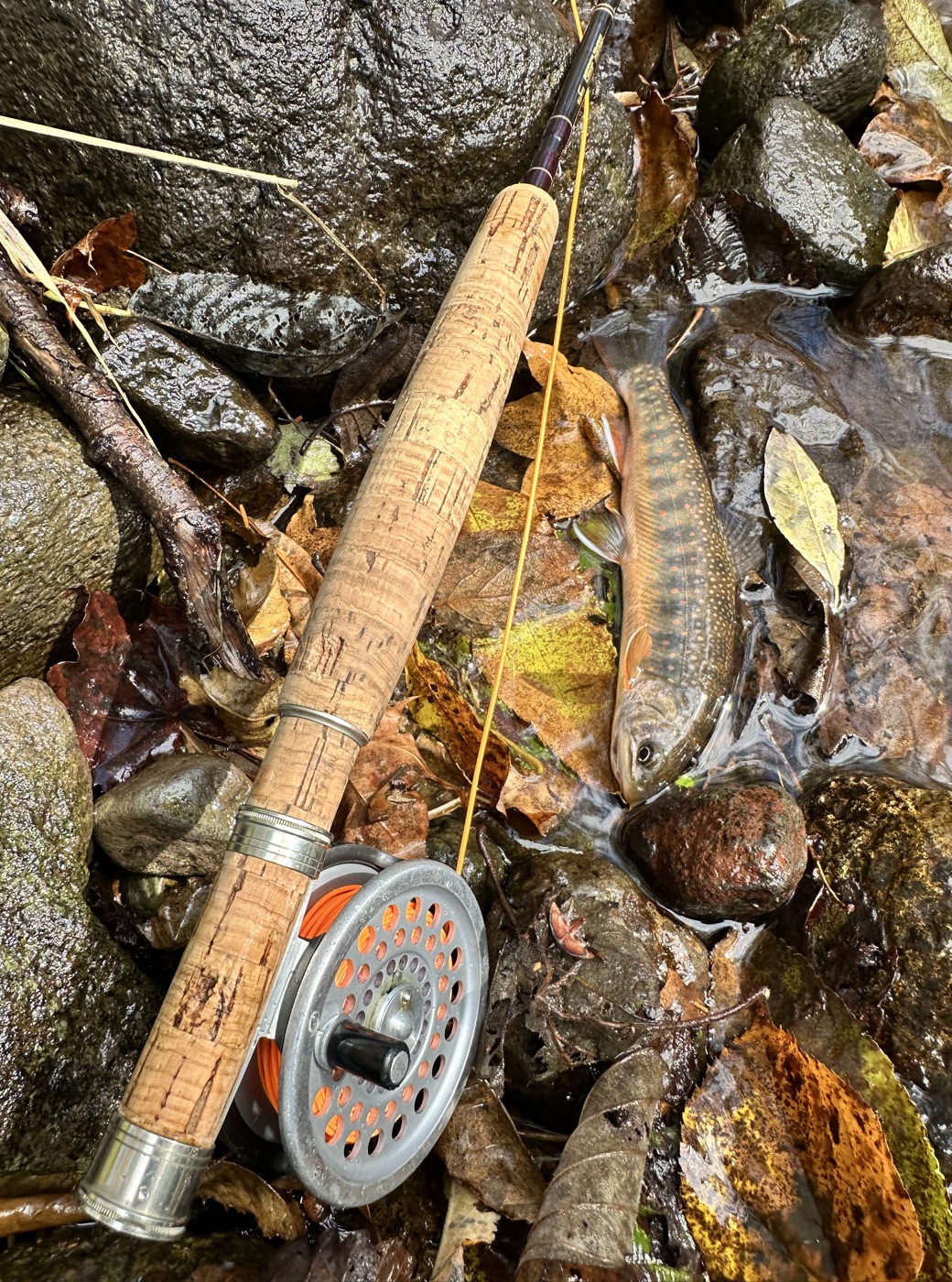
Back to Shikaribetsu, and the conditions were the opposite of the day before. Unbelievably cold and miserable, and still a productive day: rainbows on dry flies and streamers, and a surprise species.
So close on the miyabe. It would have been nice to be the only fly fisherman to land one this season.
Instant ramen and coffee under the van’s back door in the rain, after a long day of fishing.
Lake Shikaribetsu is open to fishing for about ten days in autumn and a short window in spring, so it’s rare to get a chance at it. Conditions were perfect: the water was covered in thousands of awafuki, and dozens of big rainbows were eating them off the surface.
The “pop pop pop” of fish eating on the surface.
Still, clear water meant they could eye up every bug, and they know exactly what a real awafuki looks like. Caught some nice fish anyway.
The first spot was blown out: the dams opened after the rain, trucks drove around with speakerphones warning people off, and the sirens are a scary sound.
Below a dam the water comes out fast and rough, then slows into a deep, still, clear gorge with giant rainbows in it. Sight fishing: we stood hidden in the rocks for 30 or 40 minutes scouting risers and planning the cast. The cast wasn’t great but it worked, and it was a 45cm fish with awesome colours.
Caught a fish on a fly I tied. Something I made fooled a trout into thinking it was a real bug.
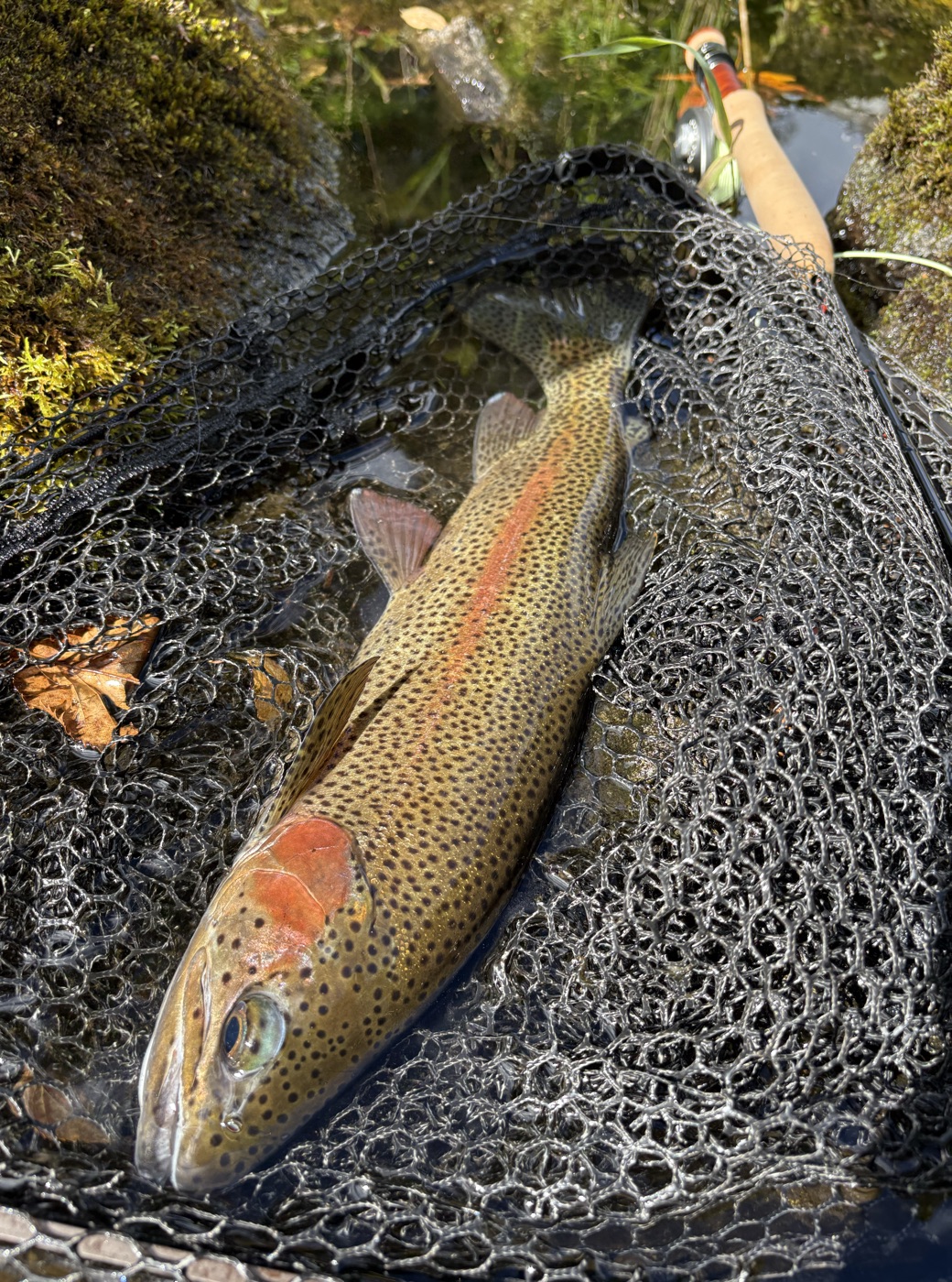
Back on the Otofuke, a different stretch with a lot more wading. Caught some small rainbows and missed a few nice ones; setting the hook and managing drag are where the gaps show. Then a thunderstorm came out of nowhere, and waving a nine-foot graphite stick around isn’t a good way to stay healthy, so we called it.
That night: first fly tying lesson. An elk caddis.
A stream through the middle of a farm field: long overhanging grass, and current that’s deep, cold, and fast. Perfect brown trout habitat, I learned later. Caught a ton of browns very quickly.
New word, learned the hard way: irakusa. Stinging nettle.
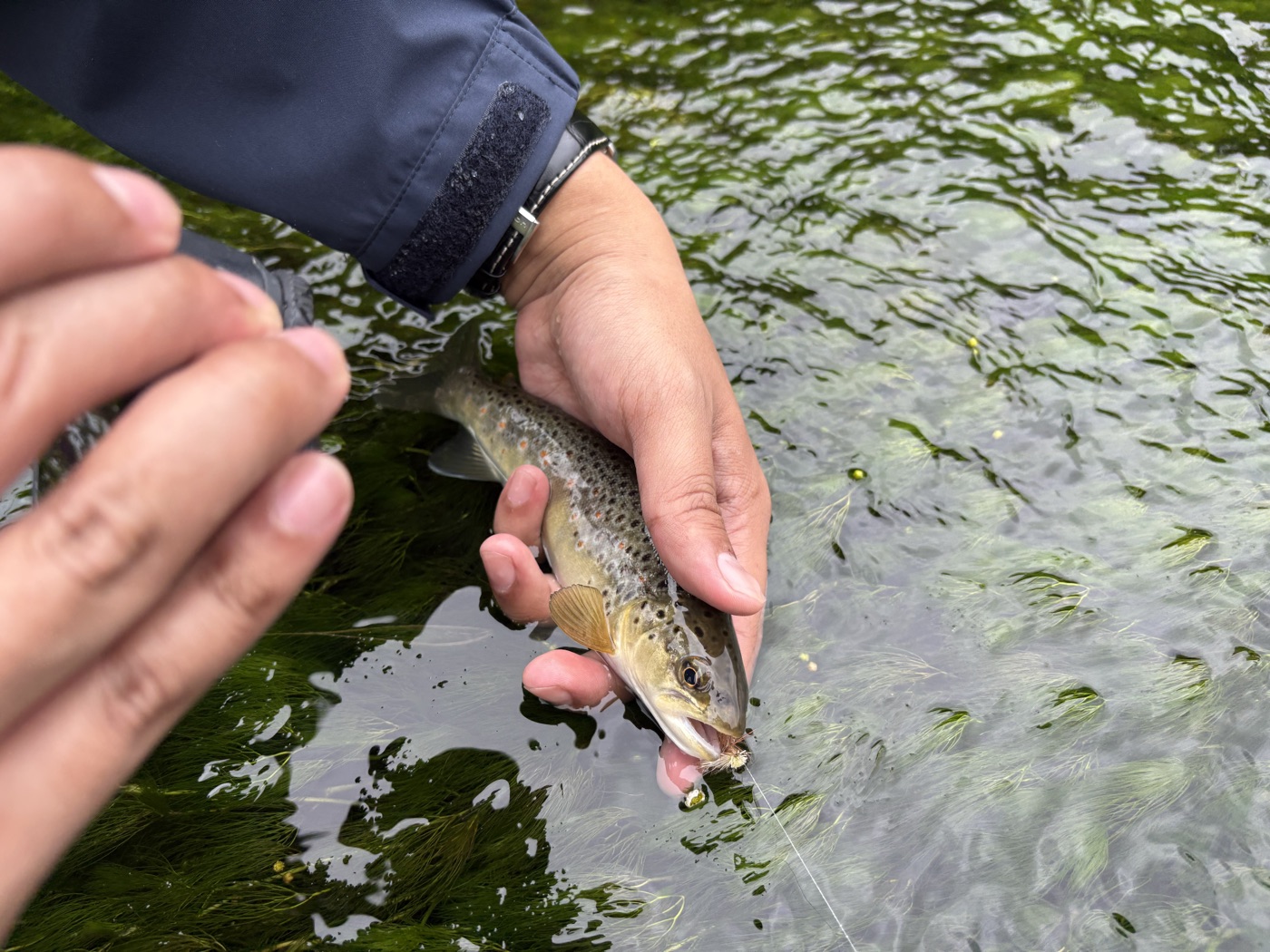
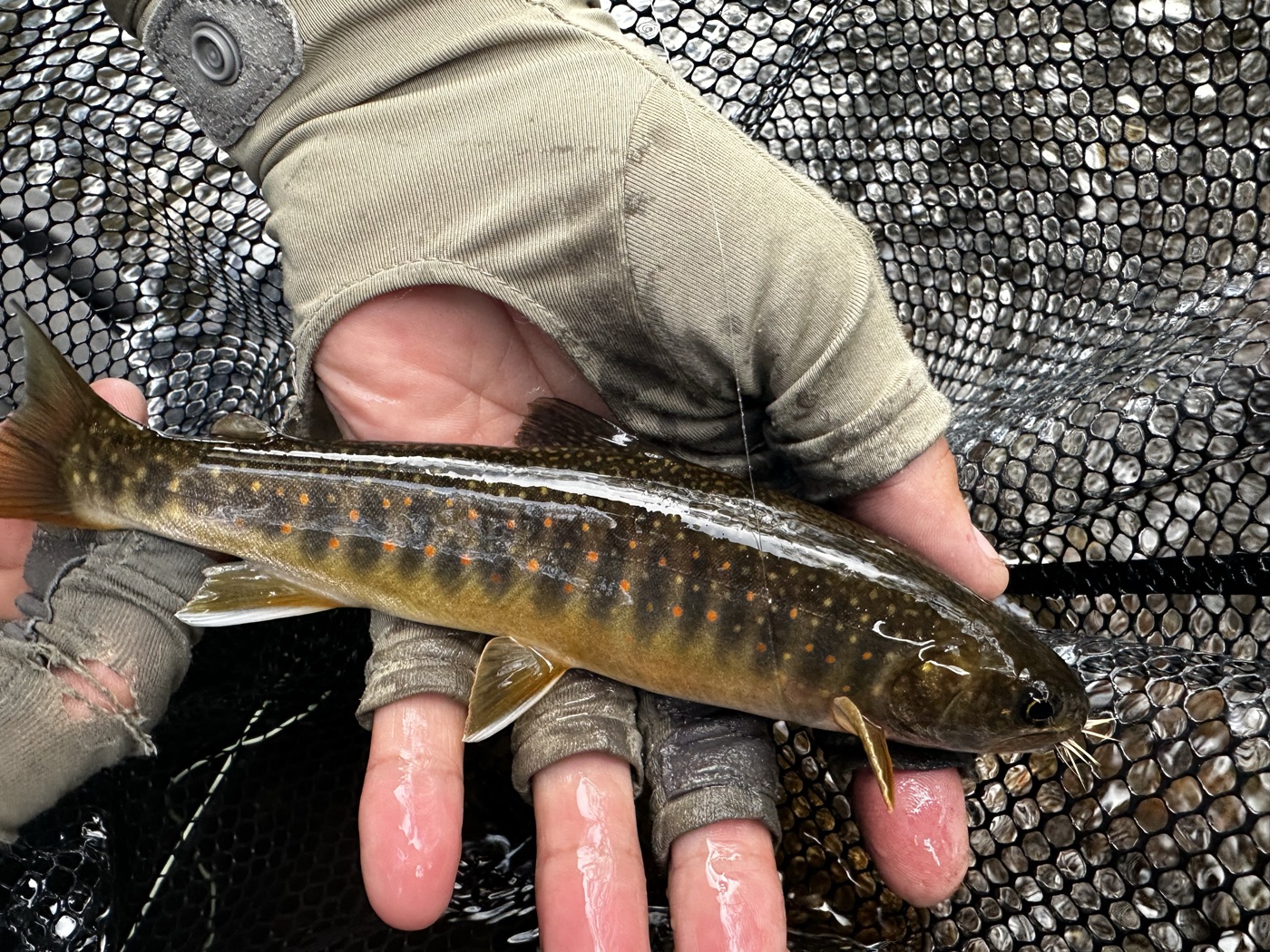
On the way back to Obihiro, Oku took me to a small creek deep in the mountain forest. I’d heard dolly varden were rare and plenty of people who fish Hokkaido never catch one. He put me in a spot where I caught nearly a dozen.
Probably the prettiest fish I’ve seen in Hokkaido.
Fish were rising and feeding on the surface when we got there, and then the wind picked up right as we started and they stopped. Switched to a wet fly and caught a few. The scenery was the best part, and photos don’t do it any justice.
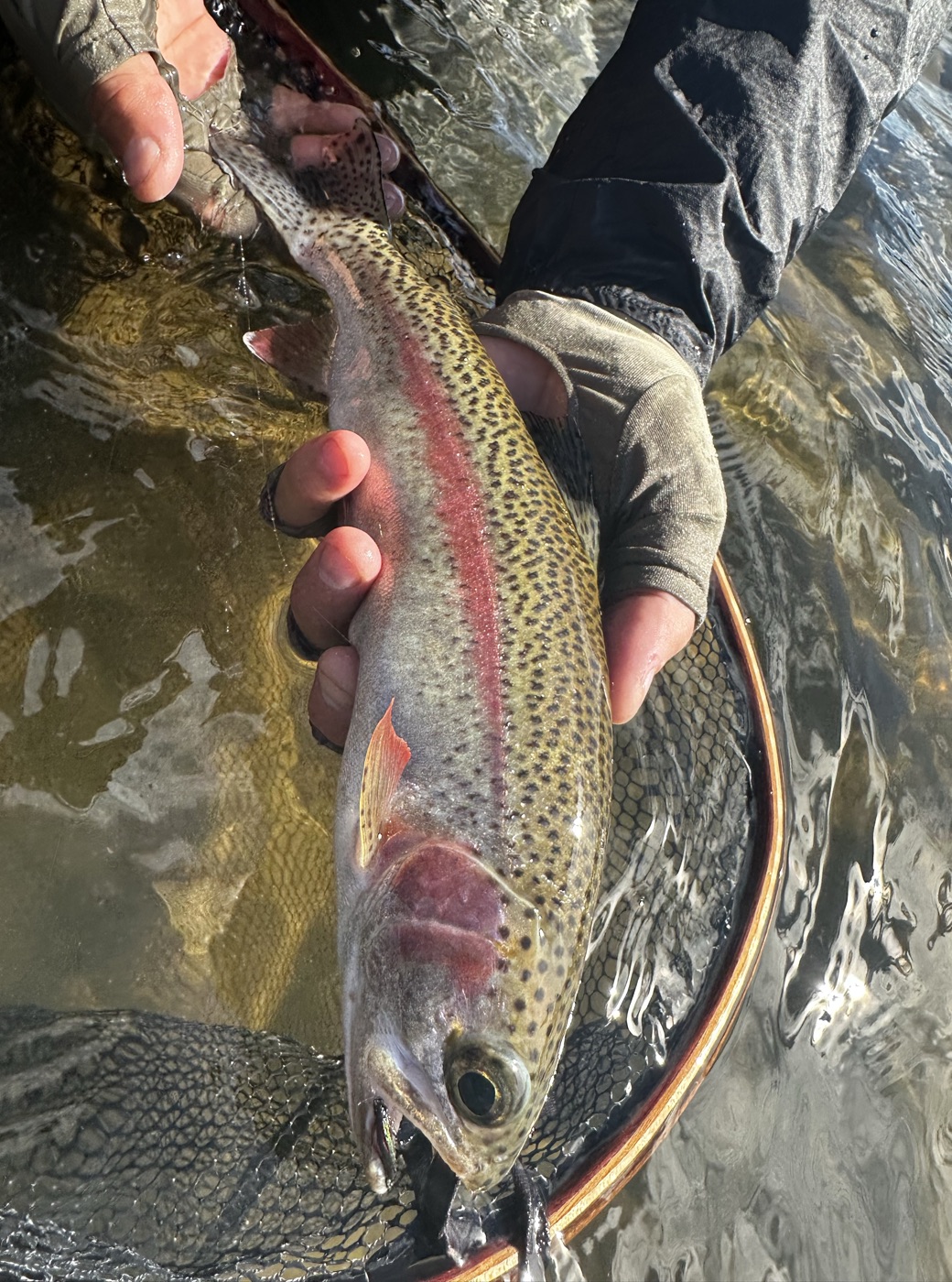
Oku called this “the most technical fishing in Hokkaido.” Deep, slow pools with giant rainbows posted up against the bank under overhanging grass. A few inches off and you’re snagged in the grass or you’ve missed the spot, and in water that clear and still a bad presentation spooks them instantly.
Mending: the casts cross currents moving at different speeds, and if any part of the line drags the fly, the gig is up.
Caught a really nice rainbow and a few smaller ones. They all fight hard.
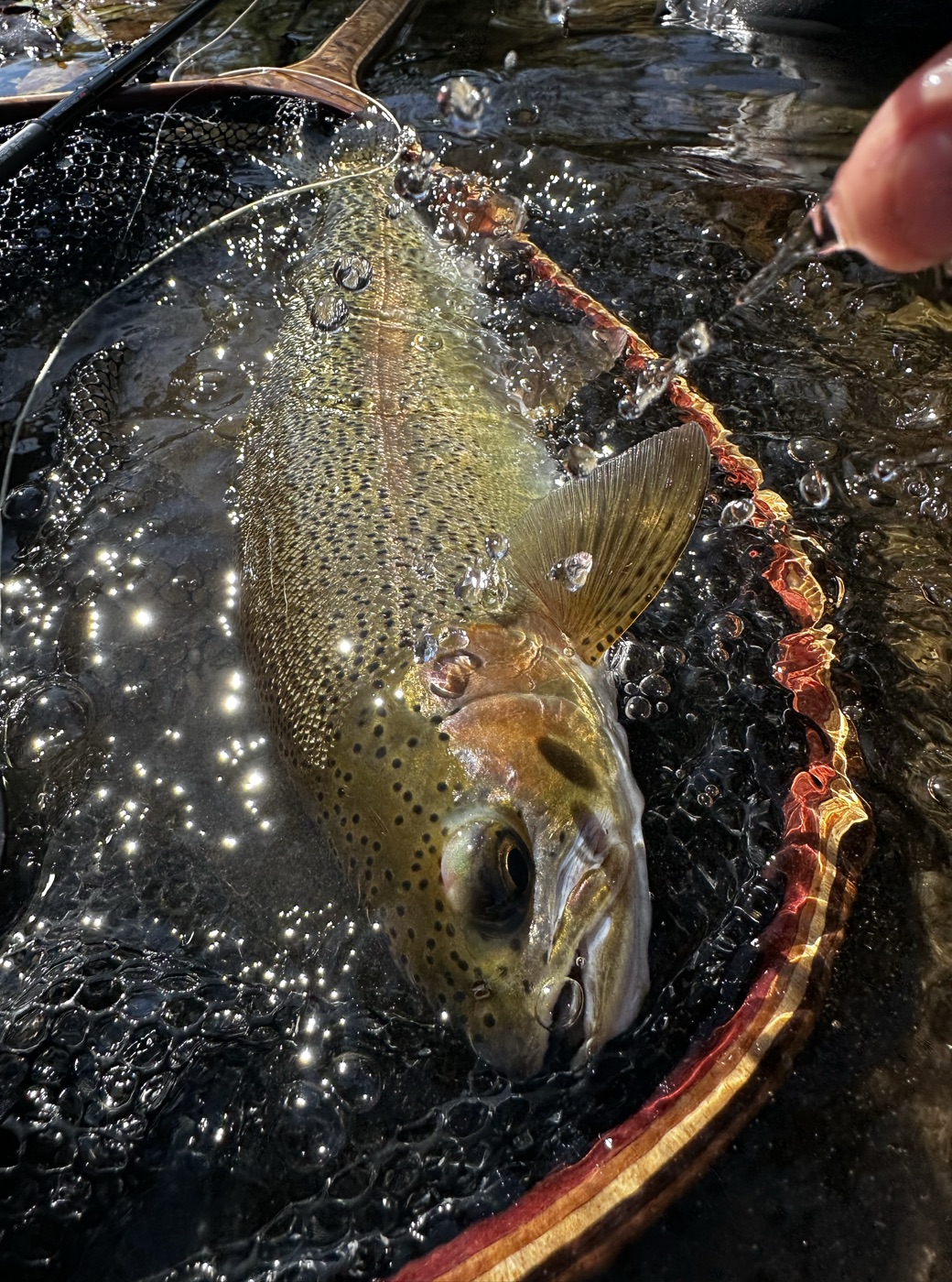
First day with Oku. That first run opened my eyes to how good a run can be: bites left and right the whole way down. My first fish he called “a small one”, and a few seconds later I was putting it on the reel. All the “small” fish he’d been pointing out were actually decent.
Three Japanese cranes flew over together. Stood there awestruck for a few minutes.
Finished up north near Ashoro, at a second spot under steep cliffs, where the wind made casting much harder than I expected.
Rugged coastline, cliffs, dense green, and streams you could step across. The fishing was bluelining: follow the thin blue lines on the map into water nobody bothers with, and look for wild iwana.
Closer to the fishing I imagined back in July than any guided day has been.
First river day with Kevin. Twelve minutes of usable footage, and suddenly the content problem was abundance, not scarcity.
Booked a charter for the three of us. I worried jigging would be a touch too physical for them, and it was hard work, but we had some success and I caught some amberjack. A really sick day, and I came home with a Croc tan.
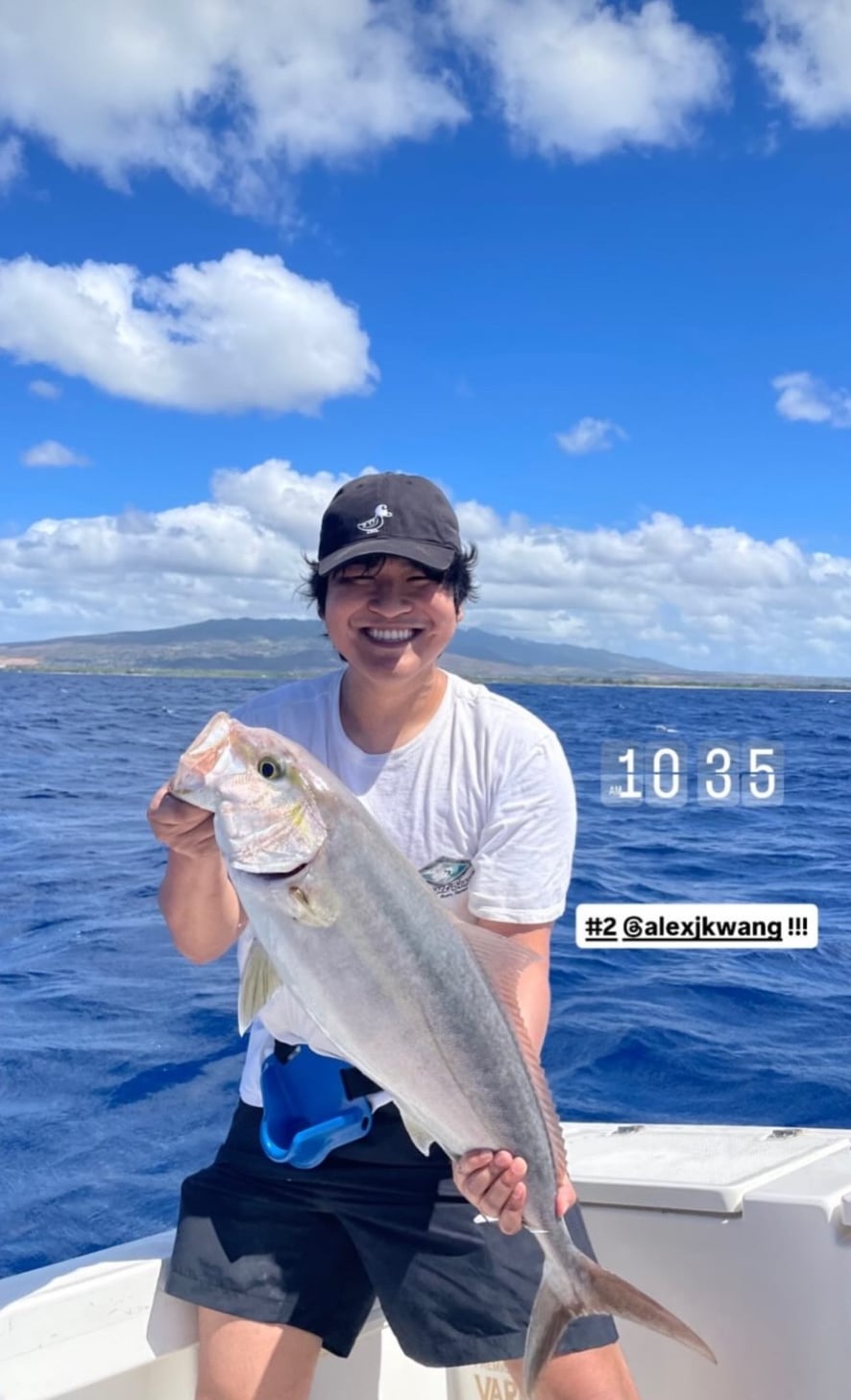
Thought I’d be more productive this week, but I’ve just been fishing all day and looking after the dog. It’s a nice life.

Stayed home and fished all day. The tilapia were feeding on the surface last time I was here, but they weren’t nearly as keen on topwater flies as I’d hoped, and the nymphs didn’t do much either.
First fish on the fly. A piece of white bread on a bare hook was definitely more effective.
